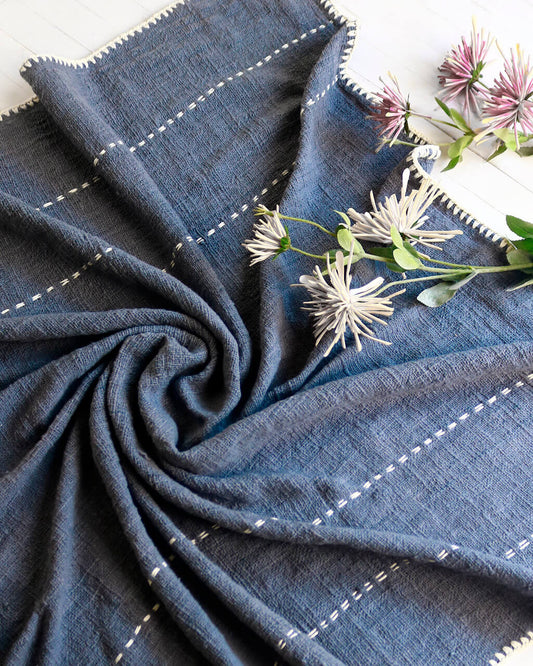
Handwoven Bali Throw Blankets: Natural Cotton and Linen for Sofas and Bedrooms
A throw blanket is one of the simplest and most effective soft furnishing investments available. Draped over a sofa arm, folded across the foot of a bed, casually tossed over an armchair — a good throw blanket adds warmth, texture, and a sense of comfort to any seating or sleeping surface in under thirty seconds. When it's made from handwoven natural cotton or linen by Balinese textile artisans, it also adds something that synthetic throws cannot: the slight irregularity of hand-weaving, the warmth of natural fiber against skin, and the way a natural cotton or linen throw softens and improves with every wash rather than developing the pilling and synthetic sheen that characterises cheaper alternatives over time.
BaliSouk's throw blanket collection uses natural long-staple cotton, linen, and cotton-linen blends — fibers selected for their hand-feel, their durability through washing, and their natural ability to regulate temperature by breathing with the body rather than trapping heat. Every throw is woven on traditional looms by Balinese textile artisans using techniques that produce the slight surface irregularity and tonal variation that distinguishes genuine handwoven fabric from mechanically uniform alternatives. Natural and low-impact dyes produce an earthy, warm palette — oatmeal, sand, terracotta, sage, natural undyed cotton — that complements teak furniture and natural material interiors perfectly.
The collection covers lightweight summer throws in washed linen and cotton gauze for warmer climates and summer use, medium-weight woven cotton throws for year-round use, and heavier herringbone and twill weave throws for colder climates and winter bedrooms. Every throw comes with care labels and is machine washable — a practical requirement for an object that's used daily.
How to Choose a Throw Blanket for Your Space
- Weight for climate and use: Lightweight linen and gauze cotton throws are appropriate for warm climates and summer use — they add visual warmth without adding physical warmth. Medium-weight woven cotton throws work year-round in most climates. Heavy herringbone and twill weave throws are specifically for cold climates and winter bedrooms where a throw needs to provide real thermal comfort, not just visual warmth.
- Size for the application: A standard single throw (130x170cm) covers a sofa arm and extends to the seated person's lap. A larger throw (150x200cm) wraps around a person fully and works as a genuine bed covering. For end-of-bed styling in bedrooms, a shorter, wider format (180x130cm) folds neatly across the foot of the bed without hanging to the floor.
- Colour in context: Throws are among the easiest things to change in an interior — which makes colour selection less critical than for larger investments. That said, natural undyed cotton and oatmeal tones work with everything and are the safest choice if you're uncertain. Terracotta and sage throws add warmth and colour accent without dominating — they're good choices for rooms that are predominantly neutral in tone.
- Texture for the sofa: If your sofa is a smooth, tight-weave fabric, a textured or loosely woven throw adds productive contrast. If your sofa is already heavily textured — a bouclé or a heavily woven linen — a smoother throw provides visual relief rather than competition.
How to Style a Throw Blanket
The sofa drape: Fold the throw once lengthways so it's approximately 40–50cm wide. Drape over one arm of the sofa, allowing it to fall naturally toward the seat cushion. This is the most natural-looking and most photographed throw styling — it suggests the throw was placed there after being used rather than composed for a photoshoot. The key is to resist the urge to smooth and flatten it completely — a little natural draping is the point.
The bed fold: Fold the throw in thirds and lay it across the lower third of the bed — from approximately the knee position downward. This is the hotel bed styling technique: it signals warmth and comfort is available without covering the decorative bedding below. The colour and texture of the throw should complement the bedding without matching it exactly.
The reading chair: A throw draped over the back of an armchair, falling toward the seat, is the single most effective way to make an armchair look inviting. It suggests the chair is used and comfortable — which is precisely what makes it visually appealing. Use a throw in a contrast colour to the chair upholstery for maximum visual interest.
Pair with Cushion Covers, Sofas & Daybeds, Rugs, All Textile.
Materials: Long-Staple Cotton, Linen, and Natural Fiber Blends
Long-staple cotton — the primary material across the throw collection — produces fabric with more thread per centimetre than standard cotton, creating a softer, stronger surface that resists pilling and softens progressively with washing. Balinese textile artisans have worked with cotton for generations, and their knowledge of the material — how to tension the loom for different weave structures, how to achieve the right weight in a woven fabric for a given yarn count — is visible in the finished throws.
Linen throws use flax fiber — the most durable natural textile fiber available. Linen is naturally bacteriostatic, moisture-wicking, and gets softer with every wash without the structural weakening that affects cotton under repeated washing over years. The slight natural crisp quality of linen that some people find stiff when a throw is new gradually softens into a supple, lived-in quality that's one of the most appealing characteristics of natural linen textiles.
Natural dyes and low-impact pigments are used wherever possible. Undyed options use the natural colour of the raw fiber — which varies between cream, oatmeal, and warm ivory depending on the specific cotton or linen batch, making each undyed throw subtly unique.
Care and Maintenance
- Machine washing: Wash at 30°C on a gentle cycle. Use mild, unscented detergent — strong detergents accelerate fiber degradation in natural textiles. Wash separately from items with zips or velcro that can snag woven surfaces.
- Drying: Dry flat or hang to dry away from direct sunlight — UV exposure causes gradual bleaching of natural dyes. Tumble dry on low if needed; remove promptly to minimise wrinkling.
- Ironing: Natural cotton and linen throws iron well at medium heat when slightly damp. Ironing is optional — the natural slight crinkle of washed linen is part of the aesthetic for many people rather than a defect to be corrected.
- Storage: Fold and store in a cool, dry place. Cedar blocks or sachets deter moth damage in natural fiber textiles stored for extended periods.
What Buyers Are Looking For
Buyers searching for handwoven cotton throws or natural linen blankets want the comfort and quality of natural fiber in a piece that improves with use rather than deteriorating. BaliSouk delivers: handwoven by Balinese textile artisans, natural cotton and linen construction, machine washable, 5-year warranty, worldwide delivery.
BaliSouk Throw Blankets: Natural Warmth, Handwoven in Bali
Every throw is woven by Balinese textile artisans, inspected before shipping, and backed by our 5-year warranty against manufacturing defects in weave structure and seam integrity.
5-Year Warranty
BaliSouk throw blankets carry a 5-year warranty against manufacturing defects. Normal softening and minor colour development through washing is expected with natural dyes and not covered.
Worldwide Delivery
We ship throws worldwide, typically within 5–10 working days. Throws are neatly folded and packaged to arrive ready to use.
Frequently Asked Questions
Do linen throws soften over time?
Yes — linen softens significantly with each wash cycle. A linen throw that feels slightly crisp when new will become noticeably softer after 5–10 washes. This softening process is one of the most appealing qualities of natural linen textile.
Will the colour fade in washing?
Natural dyes are slightly more prone to gradual fading over many wash cycles than synthetic dyes — this is expected with natural textile and contributes to the aged, lived-in quality that makes natural fiber throws more beautiful over time. Washing in cold water and avoiding direct sunlight drying slows the fading process.
Are the throws suitable for outdoor use?
Natural cotton and linen throws work well in covered outdoor settings — on outdoor sofas and in lounge areas. Keep away from direct rain exposure — natural fiber absorbs moisture and requires thorough drying to prevent mould development.
Explore the Full Textile Range
Cushion Covers, Rugs, Curtains & Drapes, All Textile.